Detecting network disturbances, such as voltage dips and swells, is an important part of power quality monitoring. However, identifying the source and direction of a disturbance can be challenging, making it more difficult to prevent similar events in the future.
A power quality analyzer may be installed either at the network operator’s substation or at the customer’s point of connection. Although both parties monitor the same electrical event, their objectives may differ.
When poor power quality causes equipment damage, the customer may need documented evidence to support a claim against the network operator. The operator, in turn, requires independent monitoring data to verify or dispute the claim. Continuous monitoring also enables early alerts, helping identify power quality issues before damage occurs.
Causes and Detection
Voltage dips and swells can result from sudden events within the network, such as short circuits, transformer energization, or the connection of large loads. For example, when a large industrial customer starts an induction motor, the resulting voltage dip may also affect nearby facilities.
Identifying the source and direction of the disturbance is important for network operators. It supports corrective action, helps prevent similar events, and provides reliable evidence when responsibility for a disturbance is disputed.
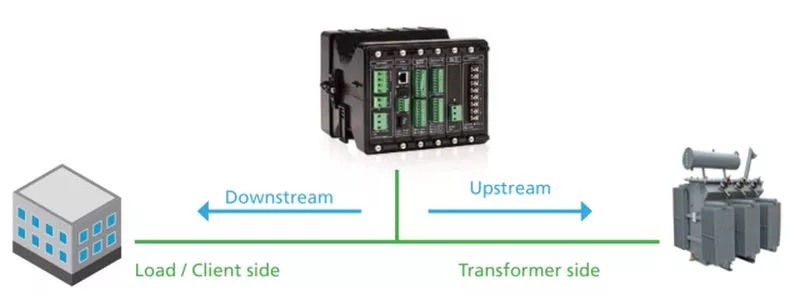
When a power quality analyzer records an event, it can determine whether the disturbance originated upstream or downstream of the measurement point. Upstream refers to the generation or utility side of the analyzer, while downstream refers to the customer or load side.
Figure 2: Disturbance Direction
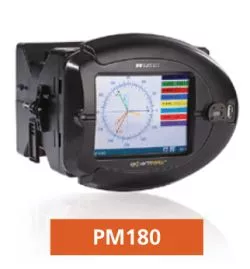
Disturbance Direction Detection with the PM180 Power Analyzer
Determining the direction of a disturbance is complex and is not supported by many power analyzers. The PM180 uses synchronized voltage and current waveforms recorded before and during an event to identify whether the disturbance originated upstream or downstream of the measurement point.
Depending on the characteristics of the event, the PM180 applies different analysis methods to the recorded data, providing a reliable indication of the disturbance direction.
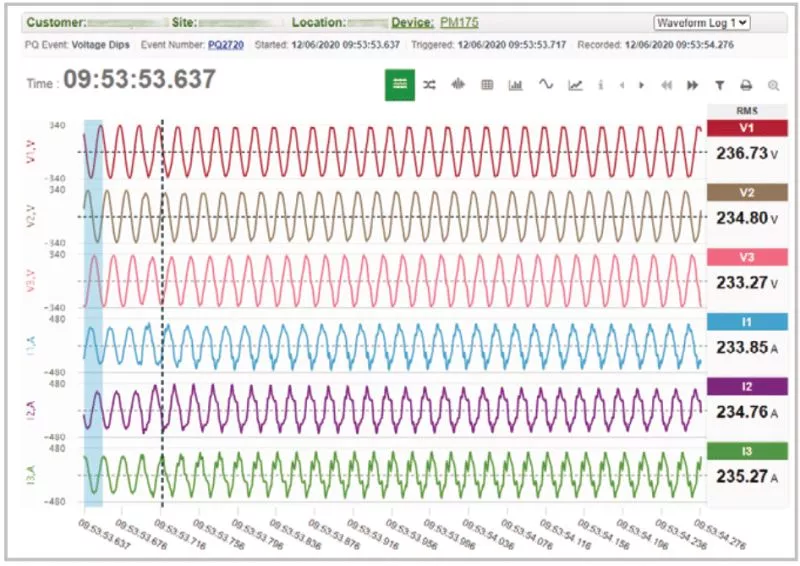
Figure 3: Voltage Dip, viewed on SATEC’s Expertpower software
Symmetrical three-phase dips and swells are analyzed using the relative magnitude of the fault or inrush current and the fundamental-frequency power angle.
Asymmetrical single-phase and two-phase dips and swells are analyzed using the negative-sequence power angle. When insufficient data is available, the fundamental-frequency power angle is used instead.
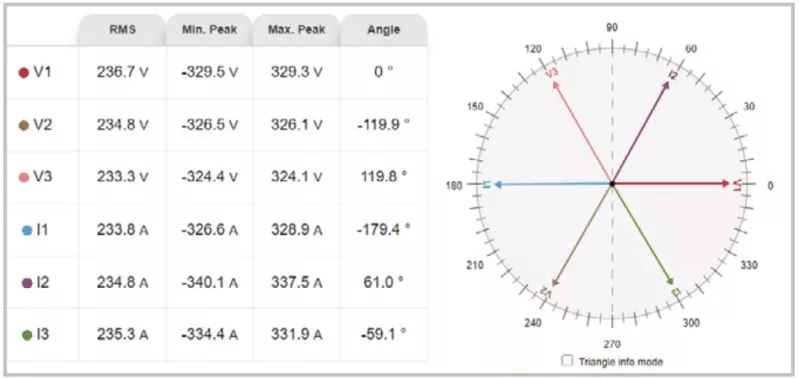
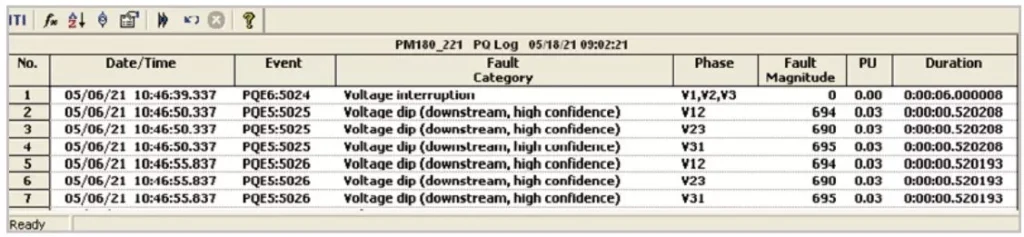
Figure 4: Voltage dip data and phasor as viewed on Expertpower
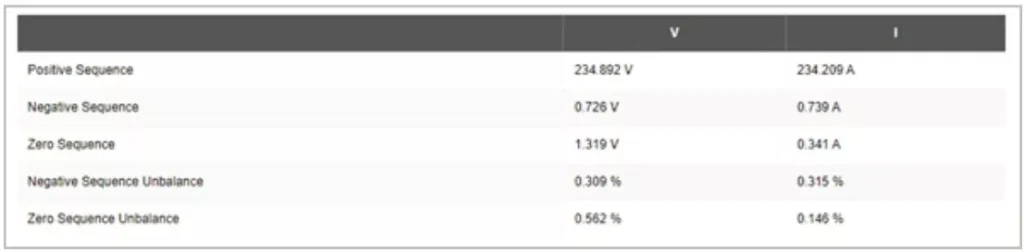
Figure 5: Sequence data as viewed on Expertpower
Figure 6: Downstream Indication
The PM180 Analyzer
The PM180 is a multifunction Class A power quality analyzer compliant with IEC 61000-4-30, Edition 3.
Its capabilities include digital fault recording, phasor measurement unit functionality in accordance with IEEE C37.118, PLC control, and more.