Our Solutions
SCADA Power Monitoring
Integrating Power Meters and Power Quality Analyzers into SCADA Systems
SCADA power monitoring brings real-time electrical telemetry— voltage, current, active and reactive power, apparent power, power factor, frequency, energy, demand, status information and power-quality parameters— directly into the same platform your operators already use to supervise and control the plant. Depending on the meter model and configuration, SATEC meters and analyzers can integrate directly with SCADA using standard industrial and utility communication protocols.
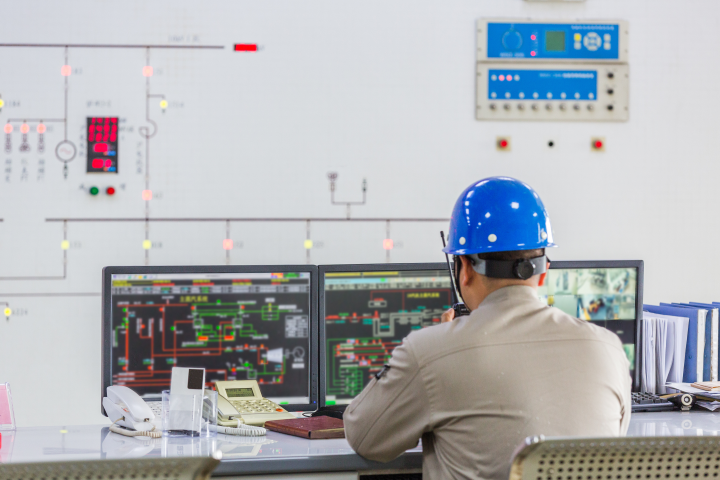
What is SCADA power monitoring?
SCADA power monitoring is the integration of energy meters and power quality analyzers into a SCADA (Supervisory Control and Data Acquisition) system, so electrical data is polled, displayed, alarmed and archived alongside the rest of your process. Instead of a standalone metering silometer measurements and status points can be mapped into SCADA tags. Integrating power meters into SCADA lets you:
- Monitor real-time electrical telemetry — voltage, current, active/reactive/apparent power, power factor, frequency.
- Track consumption and demand in real time — per feeder, per building or per process.
- Trigger alarms on thresholds — overload, voltage sag/swell, power factor, power quality events.
- Archive trends for billing, allocation, ISO 50001 and audits.
- Correlate energy with production to expose waste and inefficiency.
- React remotely without sending a technician to read a panel.
What data can SATEC meters provide to SCADA?
SATEC power meters and power quality analyzers provide SCADA systems with detailed electrical measurement data for real-time monitoring, alarming, trending and analysis. The available data depends on the meter model and configuration and can include:
- Real-time electrical telemetry — phase and line voltages, phase and neutral currents, active power (kW), reactive power (kvar), apparent power (kVA), power factor and frequency.
- Energy measurements — active and reactive energy, including import and export energy where supported.
- Demand monitoring — power demand, current demand and maximum demand values for load and capacity monitoring.
- Power quality data — voltage and current unbalance, THD and other power quality parameters, depending on the meter model.
- Harmonic measurements — voltage and current harmonics and related harmonic parameters on SATEC power quality analyzers.
- Alarms and power quality events — threshold alarms and events such as voltage dips/sags, swells and interruptions where supported.
- Status and I/O data — digital input status, programmable outputs and other available operational signals, depending on the meter and installed I/O configuration.
These measurements can be mapped into SCADA tags, allowing operators to monitor the electrical network alongside other plant, building or utility processes from a single supervisory system.
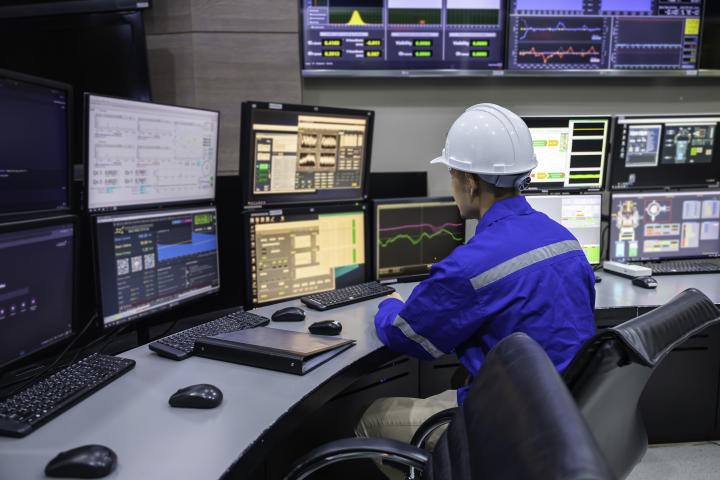
Connecting SATEC power meters to SCADA
SATEC meters are installed at switchgear, feeders or other electrical measurement points and make their measurements and status information available over serial or Ethernet communications. The SCADA system can acquire this information directly from the meter or through a communication gateway, depending on the system architecture and required protocol.
Where required, a SATEC communication gateway such as ETC-II can provide serial-to-Ethernet communication, meter aggregation, data logging or supported protocol conversion.SATEC offers meters and analyzers supporting widely used industrial and utility SCADA protocols. Protocol availability depends on the selected product and communication configuration.
Modbus RTU / Modbus TCP
The universal default. SATEC meters expose their full register map over Modbus RTU (RS-485) and Modbus TCP (Ethernet), allowing measurement, energy, status and other available data points to be mapped into SCADA or PLC systems.
DNP3
Widely used by utilities and in substations. DNP3 support brings time-stamped events and reliable reporting to SCADA masters that expect it.
IEC 61850
For digital substations and utility-grade automation, IEC 61850 lets SATEC devices integrate as native IEDs within the substation communication architecture.
IEC 60870-5-104 or IEC 60870-5-101
The telecontrol standard for utility SCADA over TCP/IP or RTU— used to hand metering and status data to control centers.
| Protocol | SATEC support | Typical use |
|---|---|---|
| Modbus RTU / TCP | Native, full register map | Industrial & commercial SCADA/PLC |
| DNP3 | Native | Utilities, substations, event reporting |
| IEC 61850 | Native (IED) | Digital substations, utility automation |
| IEC 60870-5-104 | Native | Utility telecontrol / control centers |
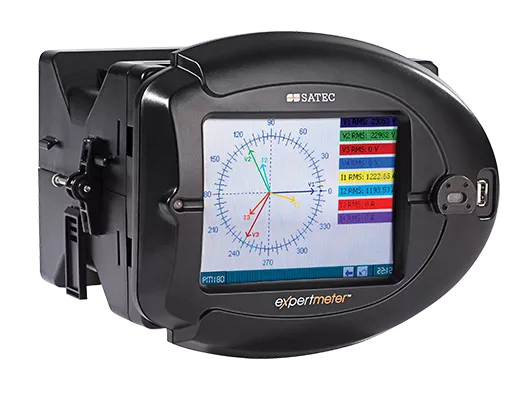
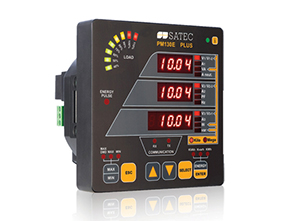
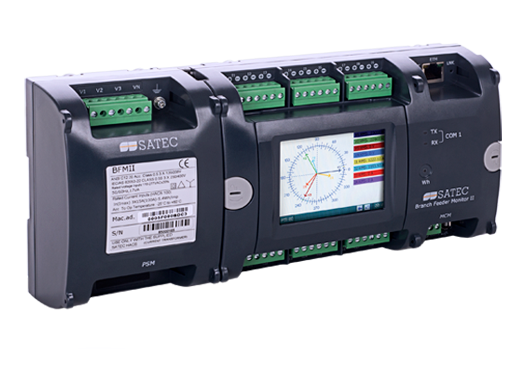
Which meters: the PM180 Class A power quality analyzer, PRO Series PM335/EM235 advanced power meters and power quality analyzers PM130EH PLUS multifunction power meter, the BFM branch feeder monitor, for high-density metering, and power quality analyzers all connect to SCADA — and can also stream to ExpertPower™ , SATEC’s energy management platform, in parallel.
Advanced Modbus features for SCADA integration
Beyond standard Modbus polling, selected SATEC power meters and power quality analyzers provide additional Modbus capabilities designed to simplify SCADA integration, reduce communication overhead and enable more efficient data exchange.
User-assignable Modbus registers
Selected SATEC meters provide 120 user-assignable Modbus registers (0–119) that allow the integrator to create a customized, contiguous register map containing the electrical parameters required by the SCADA system.
Instead of reading voltage, current, power, energy, demand and other parameters from multiple locations in the meter’s Modbus register map, the required registers can be remapped into adjacent addresses. The SCADA system can then retrieve the selected data in a single bulk Modbus request.
This simplifies SCADA register mapping, reduces the number of Modbus transactions and makes integration easier for SCADA, PLC and automation system engineers.
Active Modbus TCP notifications
Selected SATEC meters also support a Modbus TCP Notification Client, allowing the meter to initiate communication with a remote Modbus/TCP server rather than relying only on conventional SCADA polling.
Notifications can be triggered by configured events or sent periodically. This enables the meter to actively notify the SCADA or monitoring system when relevant conditions occur, instead of waiting for the next polling cycle.
This event-driven communication is particularly useful for alarms, power quality events and other time-critical conditions where faster notification to the supervisory system is required.
SCADA power monitoring applications with SATEC
- Substations & utilities — electrical telemetry, energy, power quality, status and event data into utility SCADA.
- Data centers — feeder-level visibility, PUE calculation and uptime supervision.
- Solar / PV / BESS — generation, import/export, SOC and grid-quality monitoring.
- Industrial plants — electrical distribution monitoring, energy-per-process, load management and alarms.
- Commercial buildings — electrical distribution and sub-metering data integrated into building control and monitoring systems.
Why SATEC for SCADA power monitoring: SATEC offers multi-protocol power meters and power quality analyzers designed for integration with industrial and utility SCADA systems. Depending on the model and configuration, SATEC devices support Modbus, DNP3, IEC 60870-5-101/104 and IEC 61850, together with high-accuracy electrical measurement, event recording and advanced power quality analysis.
Planning a SCADA integration? Talk to a SATEC engineer about the right meter and protocol for your system.
Frequently asked questions
Can SATEC power meters connect to a SCADA system?
Yes. SATEC power meters and power quality analyzers can integrate with SCADA systems using standard industrial and utility communication protocols. Depending on the meter model and configuration, SCADA can access real-time electrical measurements, energy data, status information, alarms and power quality parameters.
Which communication protocols do SATEC meters support for SCADA?
Depending on the meter model and communication configuration, SATEC devices support protocols including Modbus RTU, Modbus TCP, DNP3, IEC 60870-5-101/104 and IEC 61850 for industrial, commercial and utility SCADA applications.
Do I need a gateway to connect power meters to SCADA?
Not always. SATEC meters with the required communication interface can connect directly to a SCADA system using supported protocols. A communication gateway may be used to connect serial RS-485 devices to Ethernet networks, aggregate multiple meters or provide supported protocol conversion, depending on the system architecture.
What's the difference between SCADA, BMS and EMS for power monitoring?
SCADA supervises and controls industrial/utility processes in real time; a BMS manages building services (HVAC, lighting); an EMS focuses on energy monitoring, analysis, reporting and optimization. SATEC meters can provide electrical measurement data to these systems using the communication protocols supported by the selected meter.
What are the main challenges when integrating power meters into SCADA?
The usual ones are protocol mismatch, register/data-point mapping, time synchronization of events, and cybersecurity. Native multi-protocol meters and a documented register map can simplify system integration.
What is the difference between SCADA and power monitoring?
Power monitoring is the measurement layer (metering energy, demand, power quality); SCADA is the supervisory layer that collects, displays, trends and alarms this data alongside other operational information and, where applicable, provides supervisory control.
What electrical data can be integrated into SCADA from a power meter?
Depending on the meter model, SCADA can receive real-time voltage, current, active and reactive power, apparent power, power factor, frequency, energy, demand, status information, alarms and power quality parameters such as THD, harmonics and voltage events.